NANGE ATELIER
Care Guide
True luxury is the piece you return to, season after season.
Our double-faced coats are developed for warmth, structure and a soft, unfinished look. Gentle handling at home, and professional care when needed, will keep the silhouette as considered as the day it was made.
01 — Essentials
Six principles
01
Read the label
Always follow the care label sewn into your garment. If the label and this guide differ, the label takes priority.
02
Dry clean
Unless the label states otherwise, we recommend professional dry cleaning — ideally with a wool and cashmere specialist.
03
Supportive hanger
Hang on a wide wooden or padded hanger that holds the shoulder line. Thin wire hangers will distort the drape.
04
Breathable bag
Store in a cotton or canvas garment bag. Avoid plastic covers, which trap moisture and flatten the fibre.
05
Let it rest
Allow 24 hours between wears so the wool can recover its shape. Natural fibres need time, just as they need air.
06
Shield the fibre
Keep the coat away from prolonged moisture, radiators, hairdryers and strong sunlight, which fade colour and dry the yarn.

02 — Everyday
The daily ritual
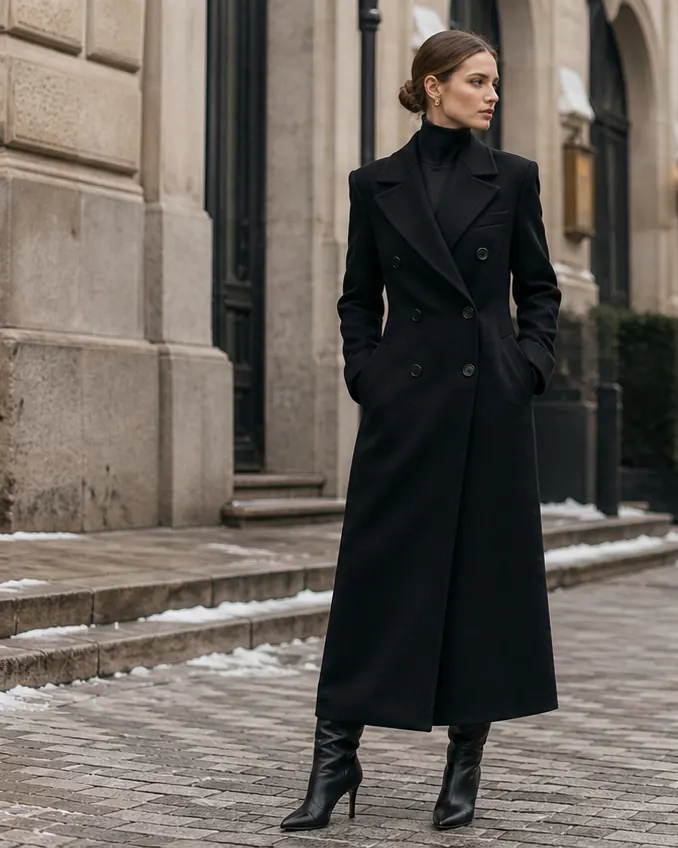
Most of a coat’s life is not in the cleaner’s — it is in how you take it off, hang it, and give the cloth a quiet moment to recover.
- Hang the coat as soon as you take it off. Empty the pockets so the hem falls evenly.
- Brush lightly with a soft clothes brush, following the direction of the cloth. This lifts dust before it settles into the fibre.
- Air it in a shaded, well-ventilated room. Never dry beside a heater or in direct sun.
- If caught in light rain, shake off moisture and hang to dry naturally. Do not use a dryer or hot steam at close range.
- Rest the coat for a full day between wears. Wool remembers shape when it is given time.
03 — Cleaning
Clean less, clean well
Over-cleaning wears a double-faced cloth faster than wearing it. Refresh at home first; reserve dry cleaning for when it is truly needed.
- Professional dry clean once or twice a season, or when the coat is visibly soiled. Ask for a wool / cashmere specialist.
- Treat small spots promptly with a clean, slightly damp cloth. Blot — do not rub. Test on an inner seam first.
- Never machine wash, wring, bleach or tumble dry. Water and agitation can shrink and board the fabric.
- If steaming, keep the steamer at a distance and move continuously. Do not press the iron directly onto the face of the cloth.
- Always dry clean before long-term storage. Residual perfume, food or moisture attracts moths.
04 — At a Glance
Do & don’t
Please do
- Use a wide, shaped hanger that matches the shoulder.
- Store in a breathable cotton garment bag.
- Brush dust away after wearing.
- Leave space in the wardrobe so the coat can breathe.
- Place cedar or lavender nearby for moth protection.
- Button loosely and tie the belt in a soft loop when hanging.
- Follow the care label on your specific garment.
Please don’t
- Hang on wire or narrow plastic hangers.
- Store in plastic, which traps humidity.
- Expose to radiators, hairdryers or strong sun.
- Spray perfume or hairspray directly onto the cloth.
- Overcrowd the closet or fold a long coat for months.
- Machine wash, bleach, wring or tumble dry.
- Iron the face of the fabric without a pressing cloth.
05 — Fabric & Storage
Double-faced cloth, quietly kept
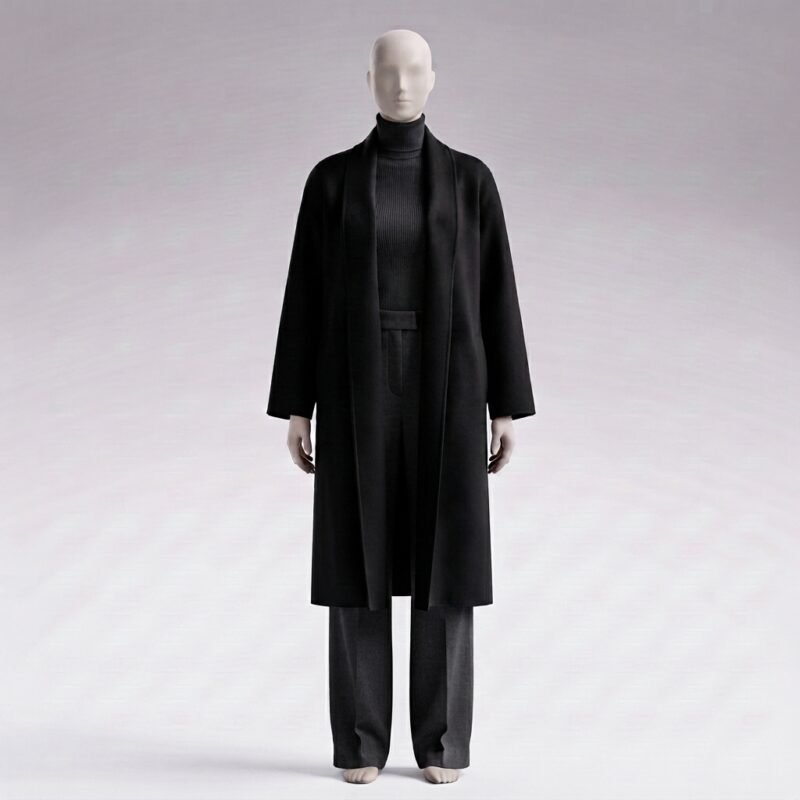
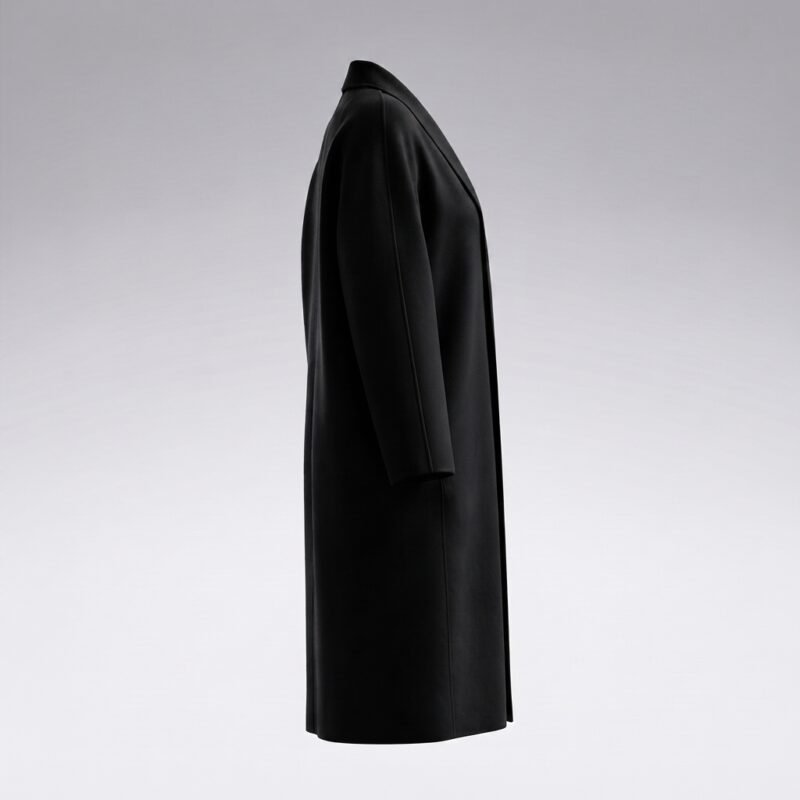
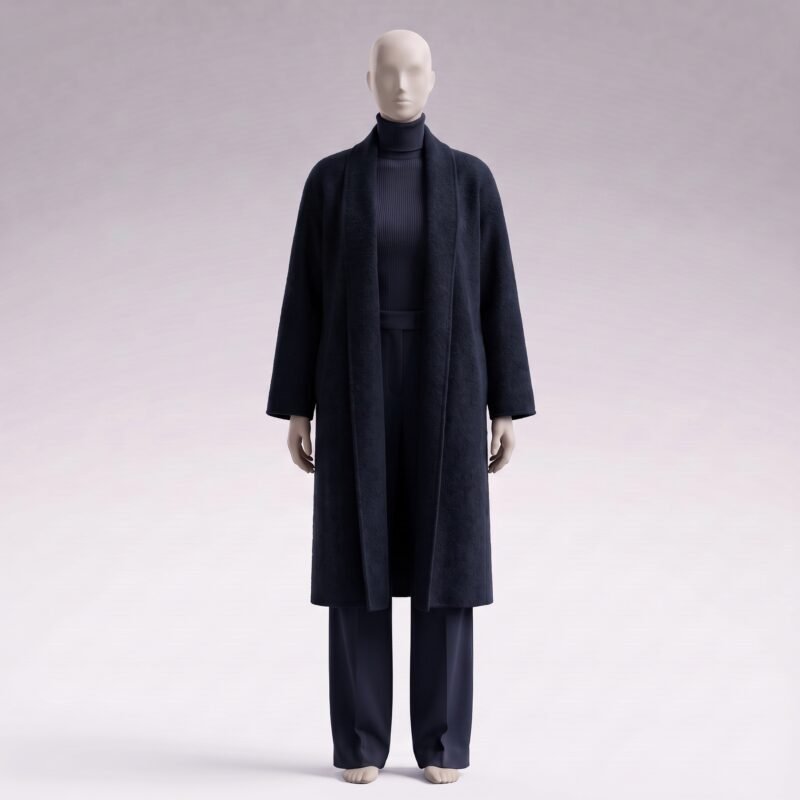
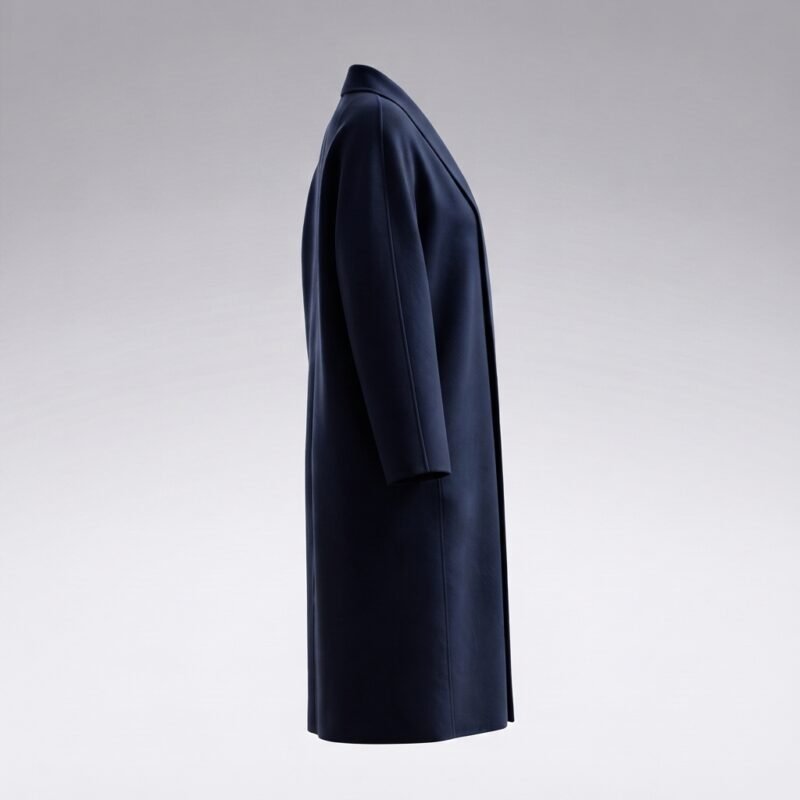
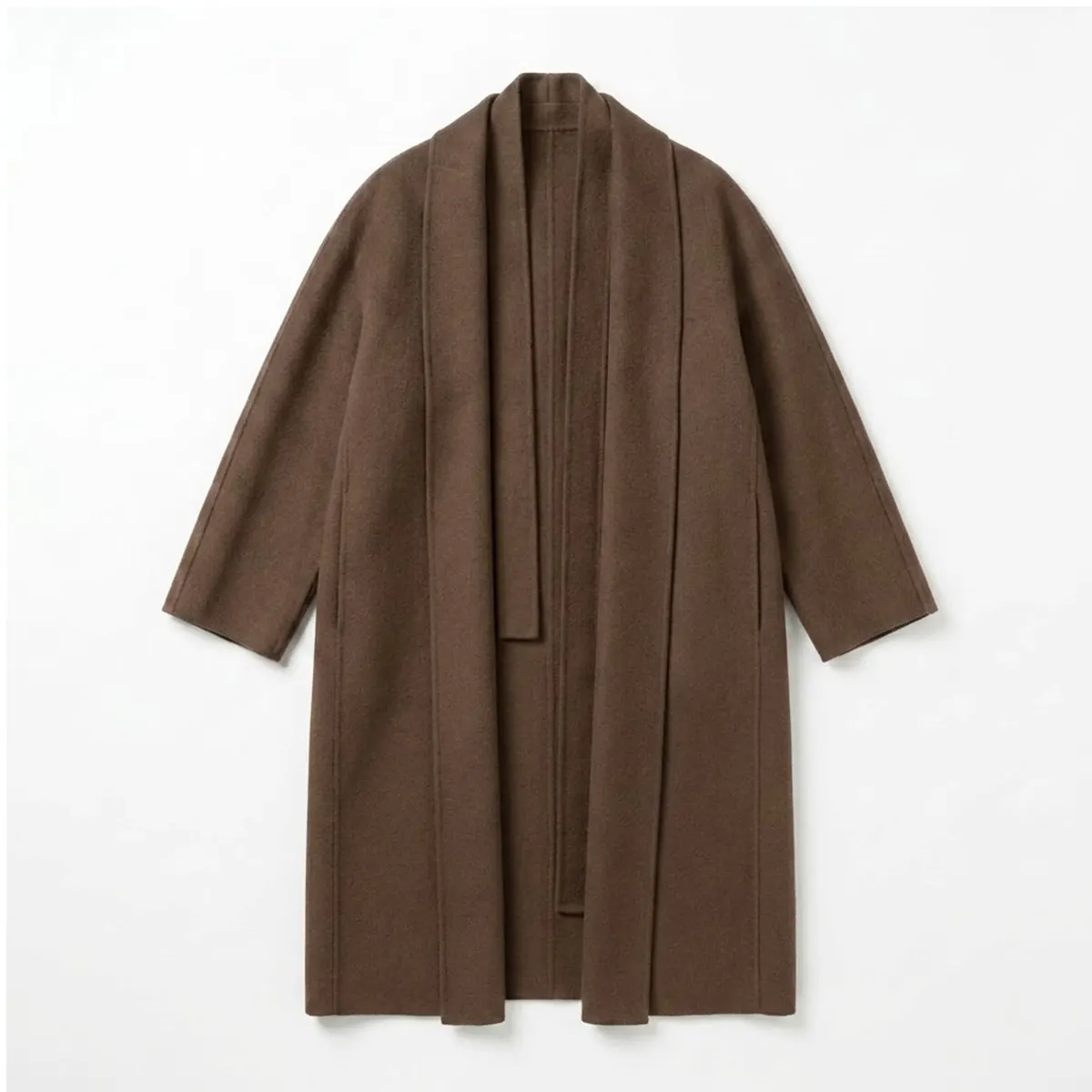
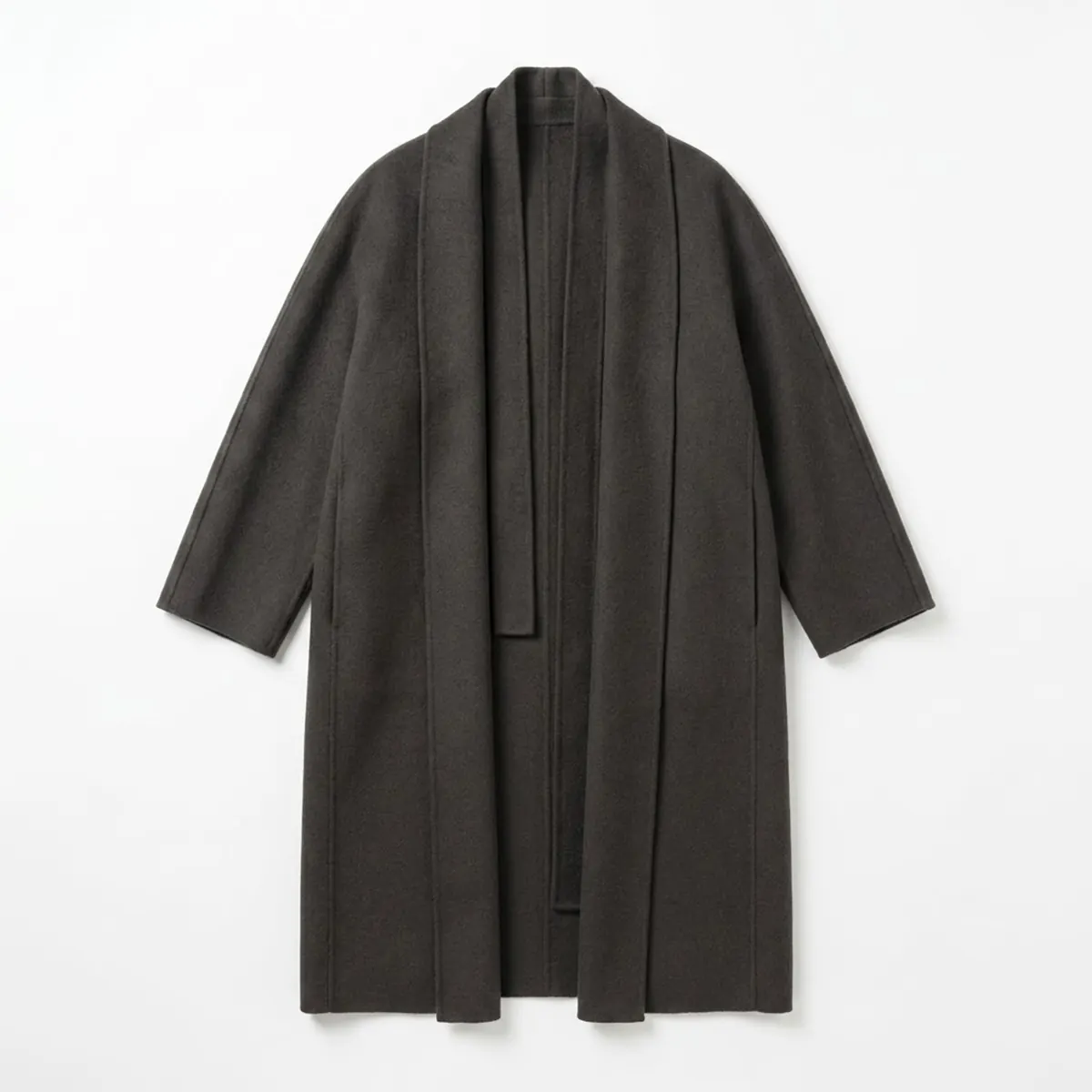
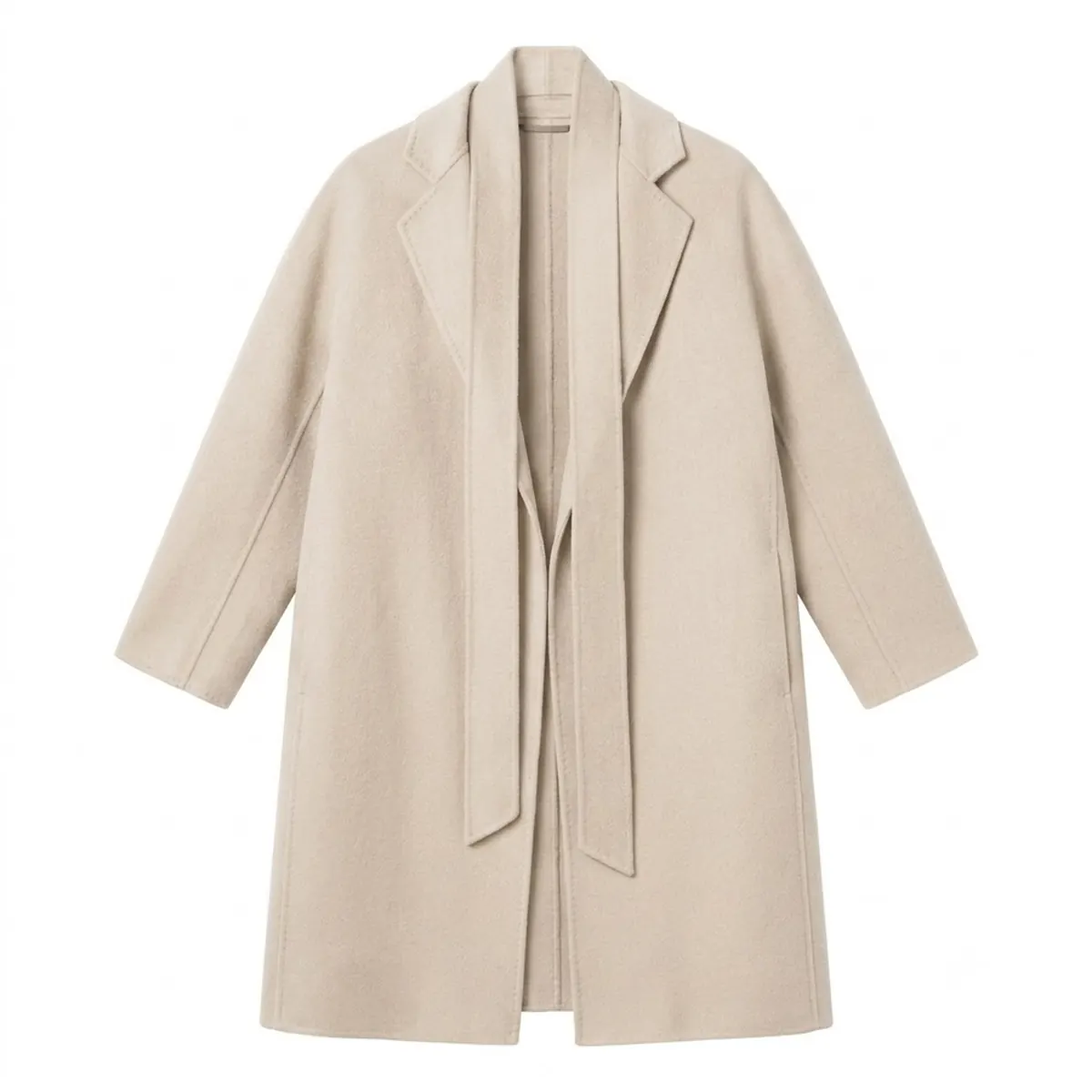
NANGE ATELIER coats are cut from double-faced velvet / wool-feel cloth — finished on both sides, without a conventional lining. The construction is clean, but it also means the whole garment is the face of the fabric. Handle it as you would a fine knit: less friction, more air, no harsh heat.
For seasonal storage, clean first, then hang in a cool, dry, dark cupboard. A breathable bag, a shaped hanger, and a little cedar are enough. Fold only if hanging space is limited, and refold along a different line every few weeks so a crease does not set.
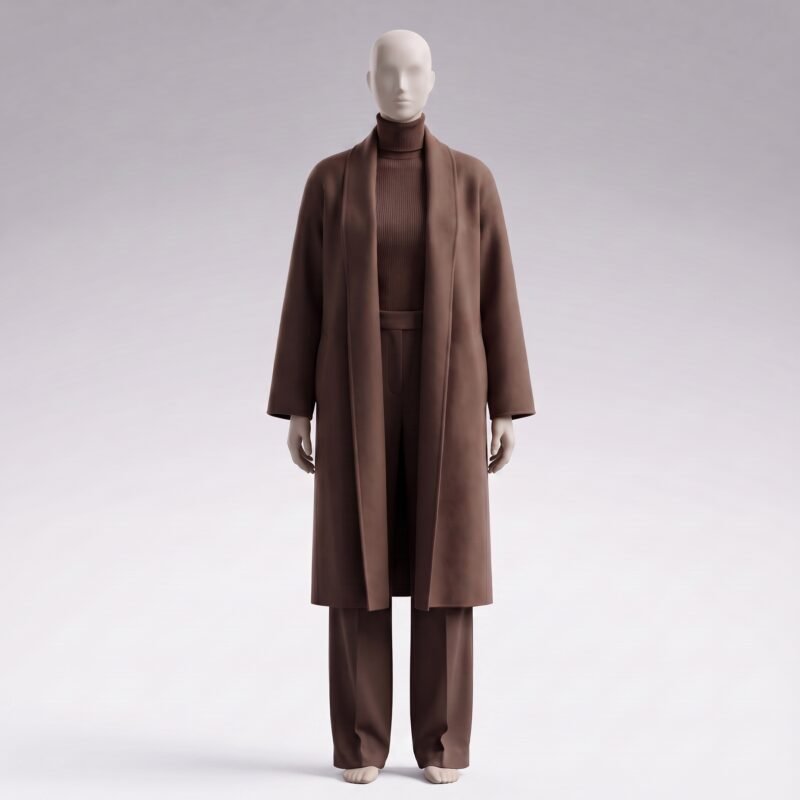
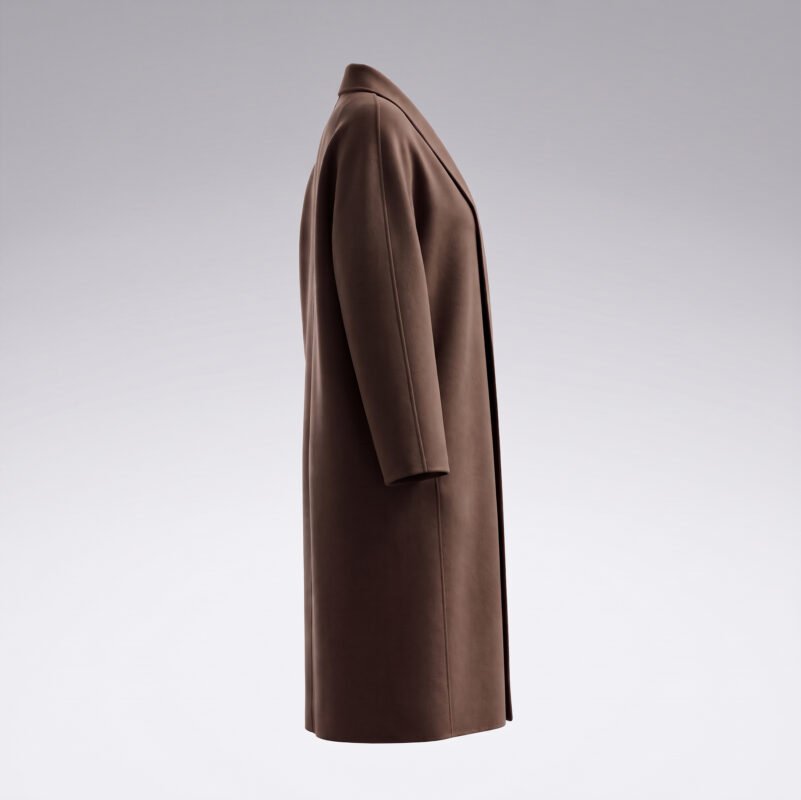
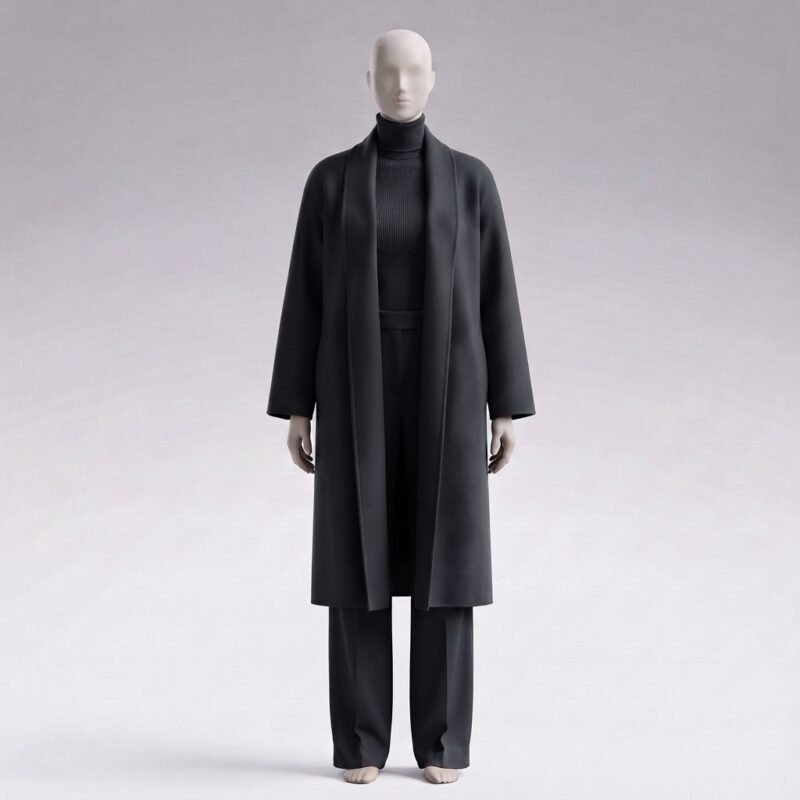
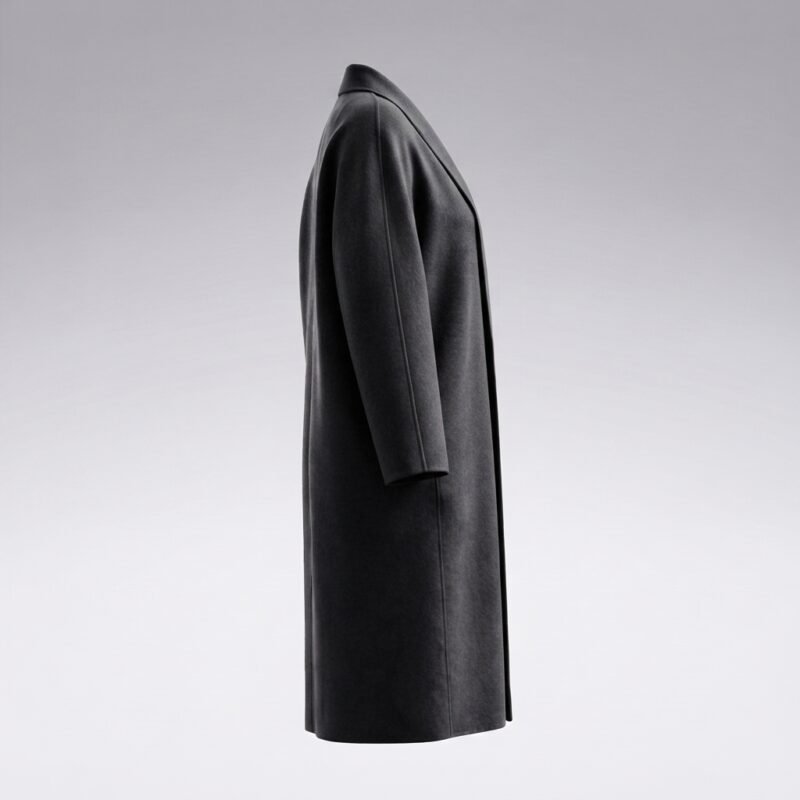
Colour, texture and fibre content may vary by style. Please review the product page and the sewn-in label for the piece you own. Natural fibres may show subtle variation — this is part of the cloth’s character.
06 — If Something Happens
A calm response
Rain
Caught in the rain
Shake off water, reshape the collar and shoulders by hand, and hang on a wide hanger to dry in shade. Once dry, brush lightly. Do not use heat. If the coat is soaked, take it to a specialist cleaner while it is still damp rather than letting it dry misshapen.
Crease
Light wrinkles
Hang the coat in a steamy bathroom for a short time, or use a garment steamer from a distance. Smooth with your hands along the grain. Avoid a hot iron on the face. Deep creases should be pressed by a cleaner with a pressing cloth.
Surface
Pilling & shine
Gentle pilling can appear where bags or seatbelts rub. Use a fabric comb or sweater stone lightly, never a razor. Shine from friction usually relaxes after resting and brushing. Persistent marks are best left to a professional.
07 — Questions
Care notes
There is no need to clean after every wear. For most seasons, one or two professional dry cleans are enough, plus a clean before summer storage. Over-cleaning shortens the life of wool-feel and double-faced cloth. Refresh with brushing and airing in between.
We do not recommend home washing unless the care label expressly allows it. Machine cycles, detergent and wringing can shrink, felt or board the fabric. If a label permits hand care, use cold water, a wool detergent, no wringing, and dry flat or hung in shade — but for NANGE ATELIER outerwear, professional dry cleaning is the safer default.
A wide wooden or padded hanger that supports the full shoulder. The hanger should be close to the coat’s shoulder width so the sleeve head does not collapse. Avoid wire hangers and thin plastic hooks.
Dry clean first. Hang in a breathable garment bag in a cool, dry cupboard, away from sunlight. Add cedar or lavender. Do not use sealed plastic. Check once during the season for moisture or moths.
We display colours as accurately as we can. Lighting, photography and your screen may still shift the tone. Natural fibres also hold subtle variation from piece to piece — this is part of the material, not a defect.
Write to us with your style number (for example 2601 long coat or 2602 short coat) and a photo of the care label. Email [email protected] or call +86 17370908199. We will advise according to the garment you own.
NANGE ATELIER
Need a second opinion?
If you are unsure about a stain, a clean, or how to store a particular colour, send us the style number and a clear photograph. We are glad to help you keep the coat for years.
[email protected] · +86 17370908199